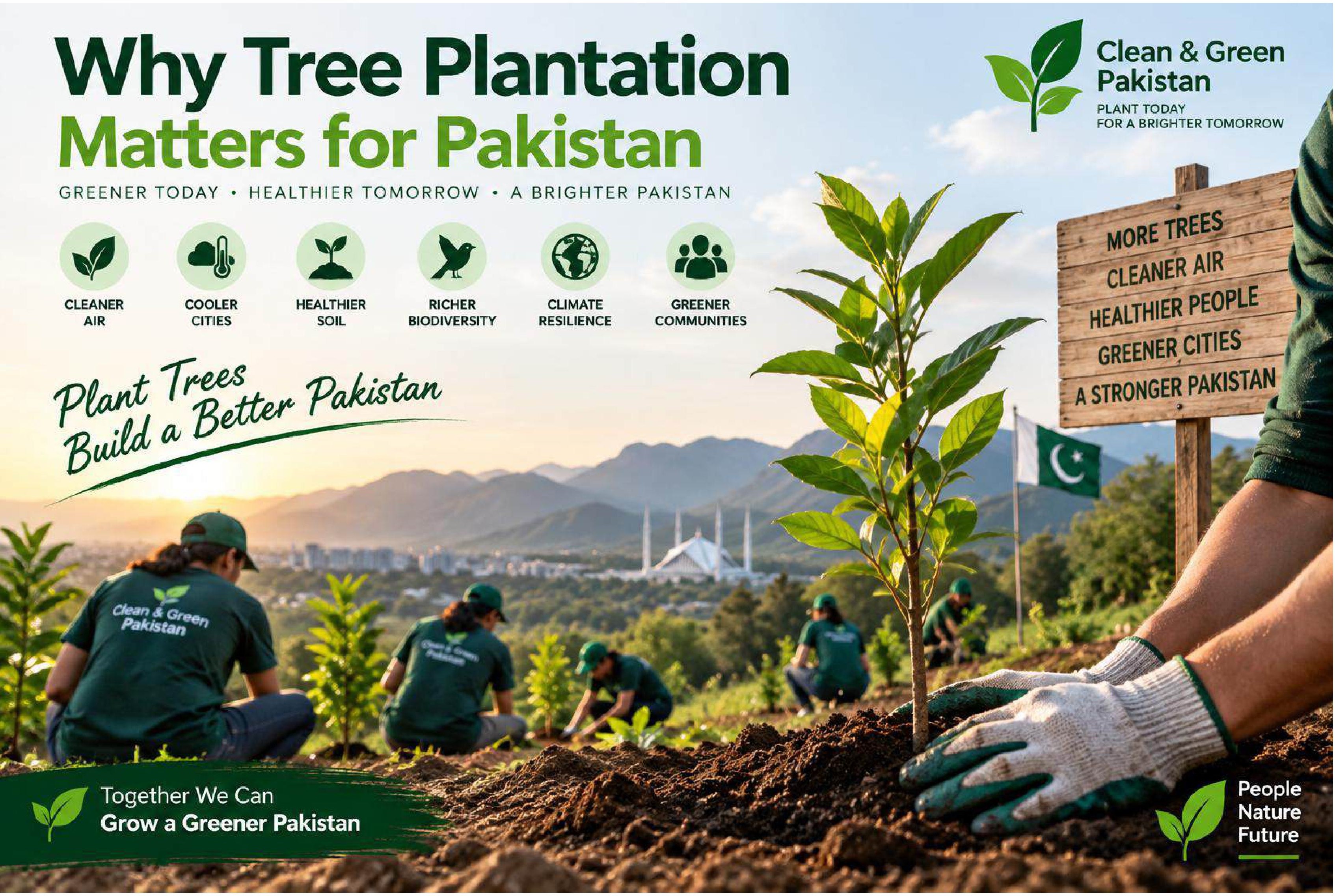
Pakistan needs more than just tree plantation campaigns. We need to plant the right trees in the right places and ensure they survive long enough to deliver meaningful environmental benefits.
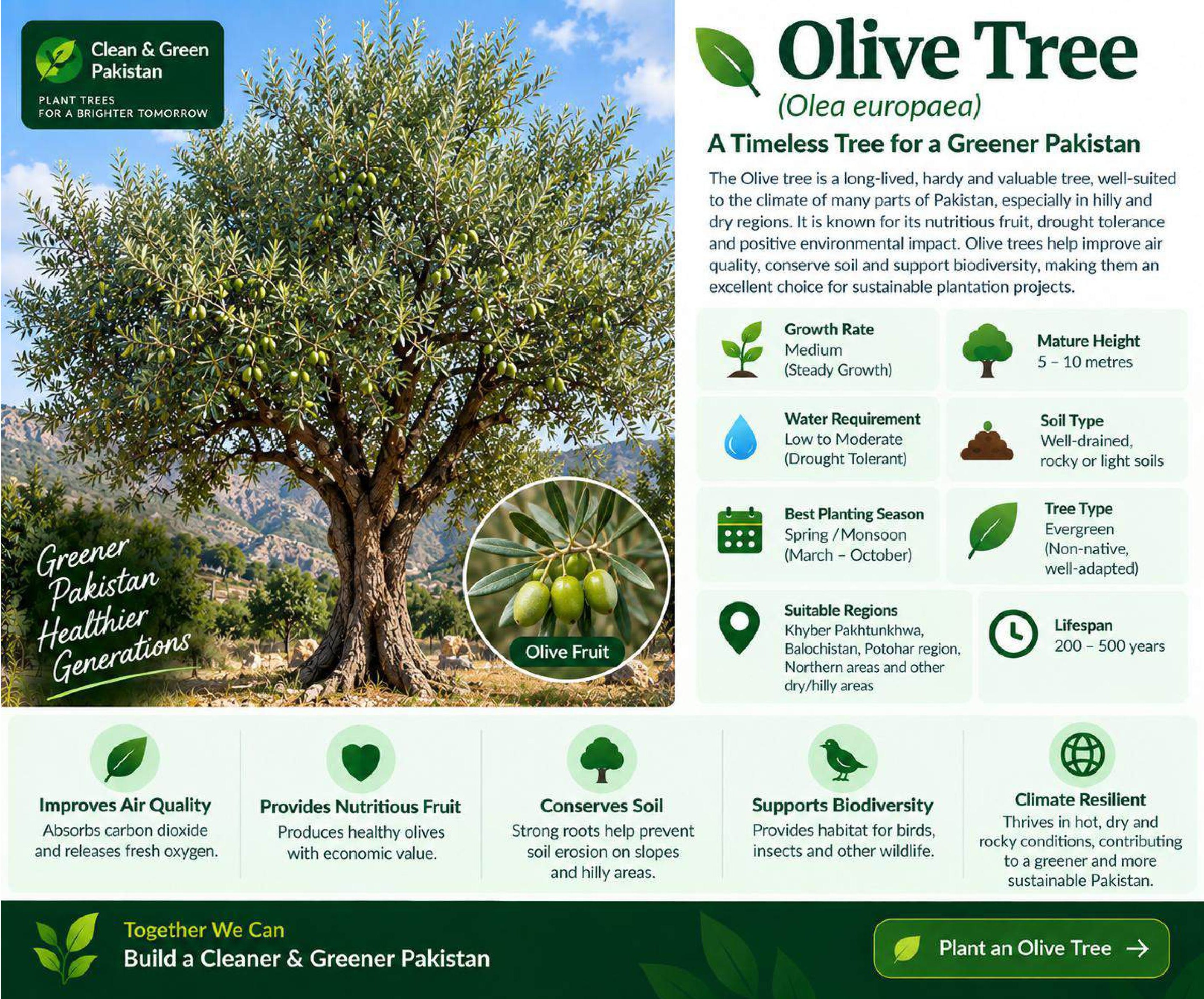
The Olive tree (Olea europaea) is one species with considerable potential in suitable parts of Pakistan. Known for its long lifespan, relatively good drought tolerance, valuable fruit and ability to grow in dry and hilly environments, Olive can contribute to both environmental improvement and sustainable agriculture.
At Clean & Green Pakistan, we believe plantation should focus not simply on the number of saplings planted, but on their suitability, survival and long-term impact.
Why Are Olive Trees Important for Pakistan?
Pakistan faces environmental pressures including declining vegetation, soil degradation, erosion, air pollution, increasing temperatures and water scarcity.
Olive trees can be particularly useful in appropriate dry and hilly areas because established trees can tolerate relatively dry conditions and provide long-term vegetation cover.
Unlike plantation projects focused solely on rapid growth, Olive plantation can offer a combination of environmental and economic value.
A healthy Olive tree can remain productive for decades and, under favourable conditions, much longer.
Environmental Benefits of Olive Trees
- Carbon Storage and Greener Landscapes
Like other trees, Olive trees absorb carbon dioxide as they grow and store carbon within their woody biomass.
Planting trees alone will not solve climate change, but establishing and protecting long-lived trees contributes to healthier and greener landscapes.
The important word is survival. A tree that survives for decades is considerably more valuable than a sapling planted for a photograph and forgotten afterwards.
- Suitable for Relatively Dry Conditions
One of the major advantages of Olive is its ability to tolerate relatively dry conditions after establishment.
This makes Olive an interesting plantation option for suitable semi-arid and hilly regions where planting highly water-demanding species may not be environmentally appropriate.
Young Olive trees still require proper watering and care while their root systems become established.
Drought tolerant does not mean that a newly planted Olive tree requires no water.
- Helps Protect Soil
Soil erosion is a serious concern in many hilly and degraded landscapes.
Tree roots help bind soil and vegetation reduces the direct impact of rainfall and wind on exposed ground. Olive trees can therefore form part of broader soil-conservation and land-restoration strategies in suitable environments.
Plantation on slopes, however, should always be properly planned rather than undertaken randomly.
- Supports Biodiversity
Trees create habitat.
Olive trees and the vegetation surrounding them can provide shelter and resources for birds, insects and other organisms. Creating diverse plantations rather than large areas containing only one species can further improve ecological value.
This is why Clean & Green Pakistan encourages mixed and location-appropriate plantation wherever practical.
Olive Trees Also Provide Economic Value
One of the most attractive characteristics of Olive plantation is that the tree is not valuable only because of its environmental benefits.
Olive trees produce fruit that can be processed for table olives and olive oil.
This means properly managed Olive cultivation can potentially combine:
Environmental improvement Agricultural production Long-term land utilisation Rural economic opportunities Soil conservation Increased permanent vegetation
This combination makes Olive particularly interesting for appropriate agricultural and community plantation projects.
Where Can Olive Trees Be Planted in Pakistan?
Olive trees should not be planted indiscriminately across Pakistan. Climate, elevation, winter temperatures, soil, drainage, rainfall and the Olive variety all affect plantation success.
Suitable Olive-growing conditions can be found in parts of:
Khyber Pakhtunkhwa Potohar region Northern Punjab Balochistan Islamabad and surrounding areas Other suitable dry and hilly regions
Before undertaking a large plantation, the site and Olive variety should be assessed with local forestry or agricultural expertise.
What Type of Soil Does an Olive Tree Need?
Olive trees generally prefer well-drained soil.
They can perform in relatively rocky and less fertile environments, but prolonged waterlogging can create problems. Good drainage is therefore an important consideration when selecting a plantation site.
Soil testing before a large-scale plantation can help determine whether the site is suitable and identify any amendments that may be required.
How Much Water Does an Olive Tree Need?
Established Olive trees are recognised for their drought tolerance, but this should not be misunderstood.
A newly planted sapling requires appropriate irrigation while developing its root system. Water requirements also vary according to temperature, rainfall, soil, tree age and whether the plantation is intended for environmental purposes or commercial fruit production.
For Clean & Green Pakistan projects, our approach should be:
Plant → Water → Protect → Monitor → Replace failures → Measure survival
Plantation does not finish when the sapling enters the ground.
What Is the Best Time to Plant Olive Trees?
The appropriate plantation period depends on the local climate.
Generally, planting should provide young trees with sufficient time to establish before severe heat, frost or water stress. Spring can be suitable in many locations, while local conditions may allow other planting periods.
For large-scale projects, local agricultural and forestry guidance should determine the final plantation schedule.
Olive vs Fast-Growing Trees: Which Is Better?
A common question in plantation campaigns is:
“Which tree grows the fastest?”
But this is not necessarily the right question.
A better question is:
“Which tree will survive here and provide the greatest long-term environmental benefit?”
Some extremely fast-growing species may consume substantial water, perform poorly in unsuitable climates or provide less ecological value than locally appropriate alternatives.
Olive grows more steadily than some fast-growing plantation trees, but compensates through longevity, drought tolerance, fruit production and potential economic value.
The correct species always depends on the location.
The Clean & Green Pakistan Approach
Our objective is not to announce that thousands of trees have been planted and then move on to another campaign.
We want to promote a more responsible model of plantation.
Right Tree. Right Place. Long-Term Care.
Before plantation, important questions should be considered:
Is this species suitable for the region? Is sufficient water available? Who will protect the saplings? Who will water them during establishment? How many trees survived after one year? How many survived after three years?
We believe plantation success should eventually be measured by surviving trees, not simply planted trees.
Sponsor an Olive Tree with Clean & Green Pakistan
A single tree may appear small compared with Pakistan's environmental challenges.
But thousands of properly selected, planted, protected and monitored trees can create meaningful change.
By supporting an Olive plantation through Clean & Green Pakistan, you can contribute towards greener landscapes, soil conservation, biodiversity and more sustainable communities.
Whether you sponsor a tree, volunteer at a plantation campaign, provide land, help monitor planted trees or encourage others to participate, there is a role for everyone.
Plant Today. Protect Tomorrow.
A greener Pakistan will not be created in a single plantation drive.
It will grow through sustained action, responsible environmental choices and communities willing to protect what they plant.
Join Clean & Green Pakistan and help us plant the right trees in the right places for a greener future.